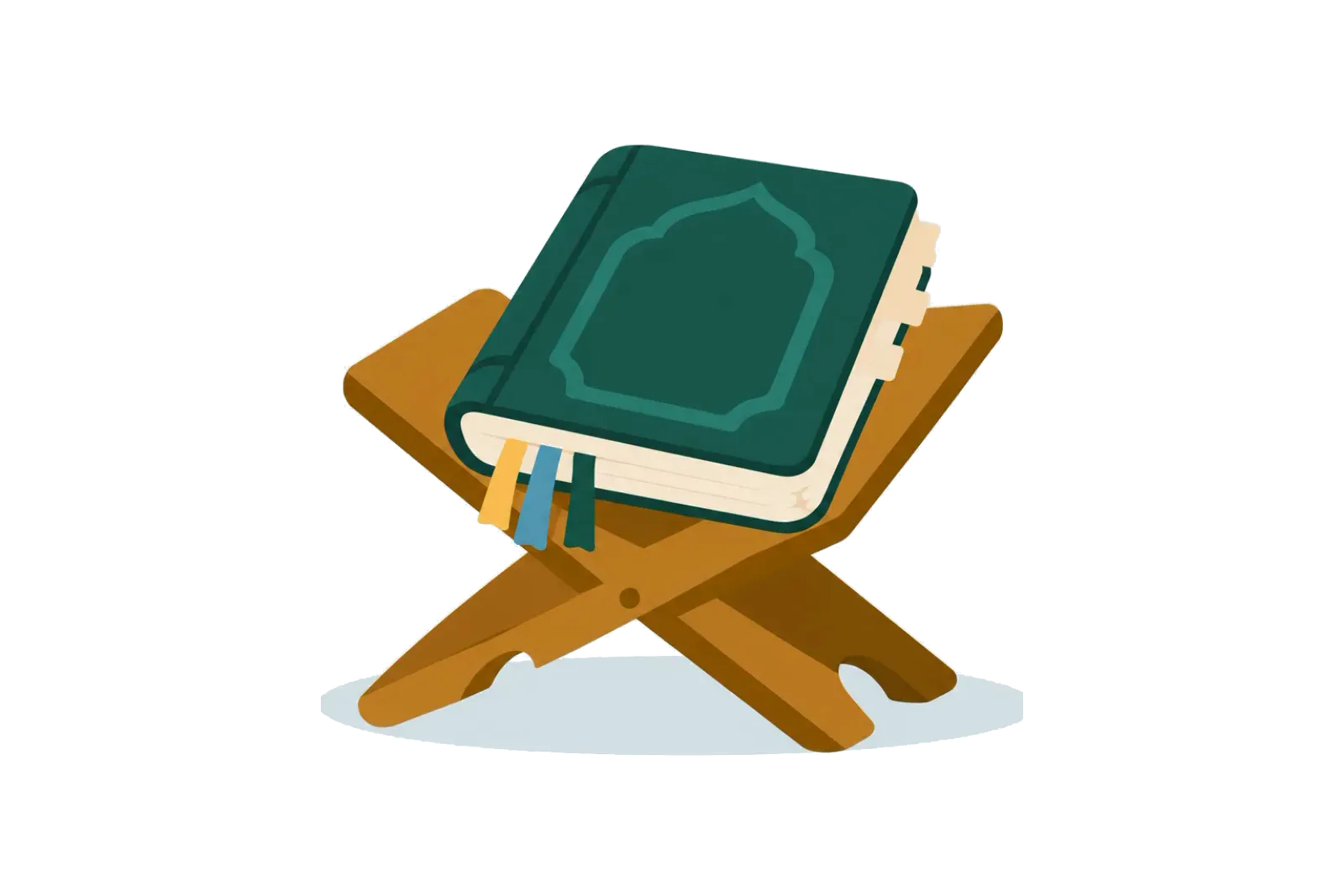
Respecting the Quran
How to respect the Quran, on paper and on screen: the adab of handling the mushaf, wudu and the digital mushaf, and the inward adab of reading with presence.
2 min read

The Quran is not a textbook. It is the uncreated speech of Allah, preserved in your hands and on your screen. How you treat it, physically and inwardly, is a quiet declaration of the place it holds in your heart.
Physical adab with the Mushaf
Approach it in a state of wudu when you can. Never place it on the floor. Don't place other books on top of it. Hold it with both hands when possible. If you can, keep one copy of your own. Face the qiblah when reciting, if your space allows.

Adab with the digital Mushaf
Most scholars hold that the requirement of wudu to physically touch the Mushaf applies primarily to the printed page, and that the screen of a device displaying the Quran sits in a different category. But this is no licence for carelessness. The spiritual adab is identical. Don't scroll past ayat absentmindedly. Don't open the Quran in the same tab you were just doomscrolling. Don't bring it into bathrooms or unclean spaces. The screen carries the words of Allah while those words are displayed. Treat that moment accordingly.
The feed is one tap away, and its pings land on the page.
Inward adab
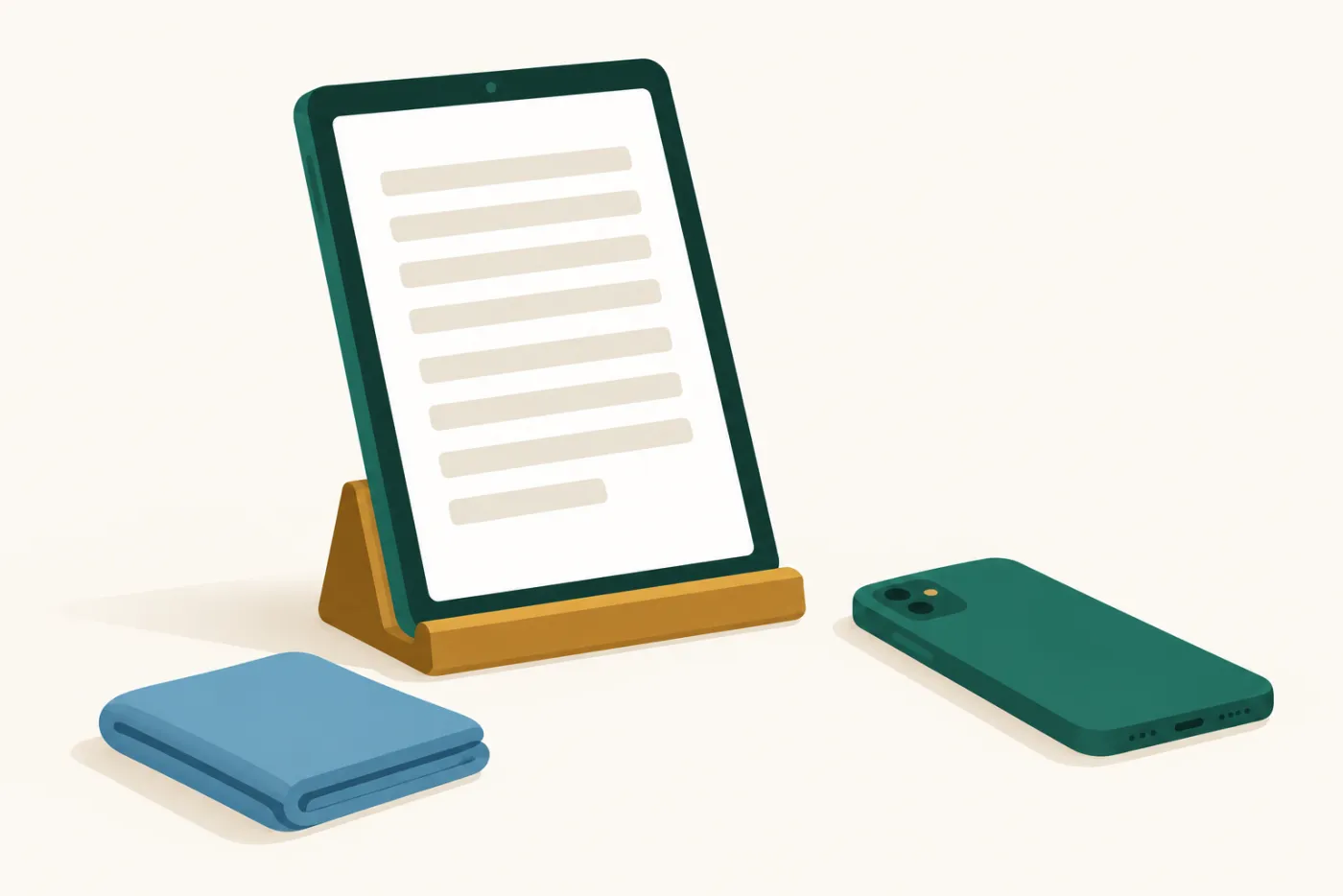
Be present, and renew your intention before you begin. Lower your voice if others around you are sleeping or distracted. Reflect on what you read, because the Quran was not revealed to be raced through. Take its commands as commands and its warnings as warnings. "Do they not reflect upon the Quran, or are there locks upon their hearts?" (47:24)
The same adab carries into a lesson with your teacher: see the manners of joining a Quran lesson. If you are learning to recite each letter correctly, the tajweed guide is a good place to start.
The way you treat the Quran in this world is the way the Quran will treat you on the Day of Judgment. It will either intercede for you or testify against you. There is no third option.